
Piriformis syndrome impacts the sciatic nerve, causing discomfort; a PDF guide offers accessible, printable stretches for relief. Physicians recommend 1-2 daily sessions.
These stretches, alongside strengthening and regular walking (around 150 minutes weekly), can significantly improve symptoms, as detailed in available resources.
Numerous PDFs detail exercises like the supine piriformis stretch and hip rotation, promoting flexibility and easing pain, aiding in a comprehensive recovery plan.
Understanding Piriformis Syndrome
Piriformis syndrome arises when the piriformis muscle, located deep in the buttock, irritates the sciatic nerve. This irritation can cause pain, numbness, and tingling radiating down the leg, mimicking sciatica. The muscle’s spasm or tightness compresses or irritates the nerve, leading to these often debilitating symptoms.
A PDF guide focusing on piriformis stretches is invaluable because it provides a readily available, visual resource for managing this condition. Many resources, like those detailing 21 flexibility exercises, specifically include the piriformis stretch as a key component of treatment. These guides often demonstrate proper form, crucial for avoiding further irritation.
Understanding the anatomy and how stretches alleviate pressure is empowering. Documents outlining home exercise programs emphasize the supine piriformis stretch and hip rotation as foundational exercises. Consistent application, as recommended by physicians (1-2 times daily), is vital for long-term relief and preventing recurrence. The goal is to restore muscle balance and reduce nerve compression.
Why a PDF Guide is Useful

A piriformis stretch PDF offers unparalleled convenience and accessibility for managing piriformis syndrome. Unlike relying on memory or online searches during a pain flare-up, a downloadable guide provides instant access to illustrated exercises, ensuring correct form and technique. This is particularly important, as improper stretching can exacerbate symptoms.
These guides often contain a curated selection of stretches, like the seated or supine variations, tailored to address piriformis tightness. They eliminate the need for constant internet connectivity and allow for practice anywhere – at home, work, or while traveling. Many PDFs, detailing 10 or 21 exercises, offer a comprehensive approach to flexibility.
Furthermore, a PDF facilitates consistent adherence to a treatment plan. You can print it for easy reference and track your progress. Resources recommend 1-2 daily sessions, and a readily available guide encourages this regularity. It empowers individuals to take control of their recovery and proactively manage their pain.

Core Piriformis Stretches
PDF guides detail essential stretches: seated, supine (figure four), and kneeling variations. These target the piriformis, relieving sciatic nerve pressure and improving flexibility.
Consistent practice, 1-2 times daily, is key for optimal results and pain management, as recommended by physicians.
Seated Piriformis Stretch
Performing the Seated Piriformis Stretch: Begin by sitting upright on a chair or the floor with your feet flat. Cross your affected leg over the opposite knee, forming a figure-four shape. Gently lean forward from your hips, keeping your back straight, until you feel a stretch in your hip and gluteal region.
Key Considerations: Maintain a level back and avoid rounding your spine. The stretch should be felt deeply in the piriformis muscle, not in your lower back. Hold the stretch for approximately 30 seconds, breathing deeply throughout. Repeat 2-3 times on each side.
PDF Resources: Many piriformis stretch PDF guides illustrate this stretch with clear diagrams. They emphasize proper form to maximize effectiveness and prevent injury. These guides often recommend visualizing the stretch targeting the deep hip rotator muscles. Adjust the intensity by leaning forward more or less, always respecting your body’s limits.
Variations: Some guides suggest gently twisting your torso towards the bent leg to deepen the stretch. Remember to consult a healthcare professional before starting any new exercise program.
Supine Piriformis Stretch (Figure Four Stretch)
How to Perform: Lie on your back with your knees bent and feet flat on the floor. Cross your right ankle over your left knee, creating a “figure four” position. Gently pull your left thigh towards your chest, grasping behind your thigh or over your shin. You should feel a stretch in your right hip and glute.
Important Technique: Keep your lower back pressed into the floor throughout the stretch to avoid strain. Avoid pulling on your knee; focus on bringing your thigh closer to your chest. Hold the stretch for 20-30 seconds, breathing deeply and consistently.

PDF Guidance: Numerous piriformis stretch PDF resources demonstrate this stretch, often highlighting the importance of maintaining a neutral spine. They frequently advise grasping the knee and pulling it “way to the floor” while keeping hips level.
Repetitions & Caution: Repeat 2-3 times on each side. If you experience any pain, stop immediately and consult with a physical therapist or doctor.
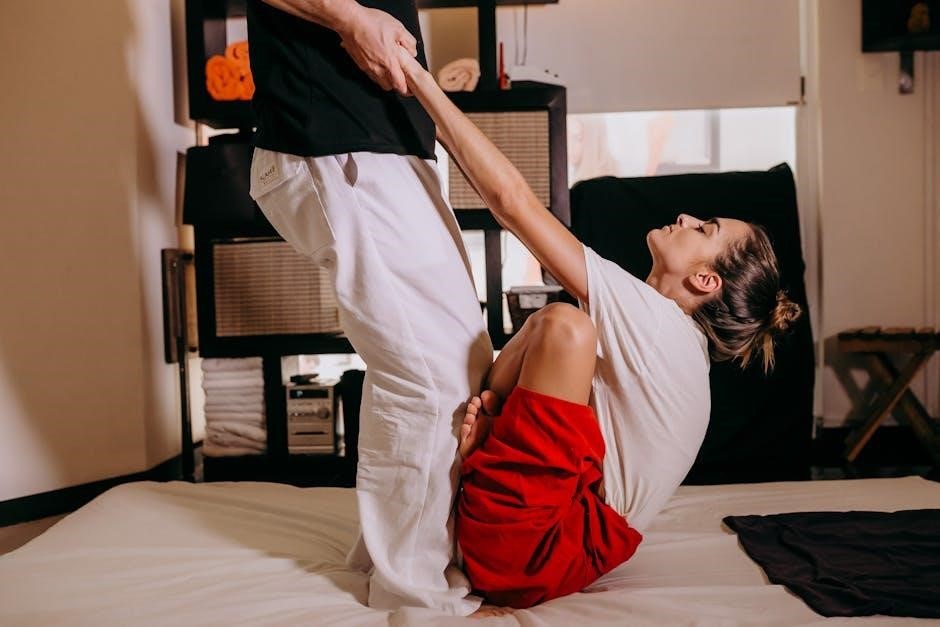
Kneeling Piriformis Stretch
Starting Position: Begin by kneeling on your right knee, with your left foot flat on the floor in front of you, forming a 90-degree angle. Ensure your right knee is directly below your right hip. Maintain an upright posture, engaging your core for stability.
Performing the Stretch: Gently lean forward, keeping your back straight, until you feel a stretch in your right hip and gluteal region. Avoid arching your lower back; focus on a forward tilt from the hips. You can deepen the stretch by slightly rotating your torso towards the left.
PDF Resources: Many piriformis stretch PDF guides illustrate this stretch, emphasizing the importance of controlled movement and proper form. Some resources suggest holding the stretch for 30 seconds, repeating 2-3 times per side.
Modifications & Caution: If the stretch is too intense, reduce the forward lean. Stop immediately if you experience any sharp pain. This stretch is often included in home exercise programs for piriformis issues.

Advanced Piriformis Stretching Techniques
PDF guides reveal techniques like hip rotation and dynamic stretches, building on core exercises. These enhance flexibility and target deeper muscle engagement for relief.
Standing variations offer unique challenges, while dynamic movements prepare muscles, improving range of motion and reducing discomfort effectively.
Piriformis Stretch with Hip Rotation
This advanced technique, often detailed in piriformis stretch PDFs, combines stretching with rotational movement to deeply target the muscle. Begin by lying on your back with knees bent and feet flat on the floor. Cross your right ankle over your left knee, forming a figure-four shape.
Gently pull your left thigh towards your chest, holding the stretch. Now, slowly rotate your right knee inwards and outwards, maintaining the figure-four position. This rotational component increases the stretch’s intensity, addressing tightness from multiple angles.
Hold each rotation for a few seconds, feeling the stretch in your right hip and glute. Repeat 10-15 times before switching sides. PDF guides emphasize keeping your back and hips level throughout the exercise to isolate the piriformis. Remember to breathe deeply and avoid pushing beyond your comfort level. This stretch is particularly effective for releasing tension and improving hip mobility.
Standing Piriformis Stretch
This accessible stretch, frequently illustrated in piriformis stretch PDFs, can be performed almost anywhere. Stand with your feet shoulder-width apart, maintaining good posture. Gently cross your right ankle over your left knee, creating a figure-four position while balancing.
Slowly bend your left knee, as if sitting into a chair, while keeping your back straight. You should feel a stretch in your right hip and glute. To deepen the stretch, gently press down on your right knee. Hold this position for 20-30 seconds, breathing deeply.
PDF resources often advise using a wall for support if balance is an issue. Repeat the stretch 2-3 times on each side. This standing variation is convenient and effective for relieving piriformis tension throughout the day. It’s a great option for those who find lying down uncomfortable or inaccessible, promoting flexibility and reducing discomfort.
Dynamic Piriformis Stretches
Unlike static stretches, dynamic movements prepare the piriformis muscle for activity, often detailed in advanced piriformis stretch PDFs. One example is the leg swing – gently swing one leg forward and backward, then side to side, controlling the motion and increasing range gradually;
Another effective exercise is hip circles; rotate your hips in a circular motion, both clockwise and counterclockwise. These movements enhance blood flow and flexibility. PDF guides emphasize performing 10-15 repetitions of each exercise.
Dynamic stretches are best incorporated into a warm-up routine before exercise. They improve mobility and reduce the risk of injury. Remember to maintain proper form and avoid pushing beyond your comfortable range. Combining these with static stretches provides a comprehensive approach to piriformis care, promoting optimal function and minimizing discomfort.
Complementary Exercises & Lifestyle
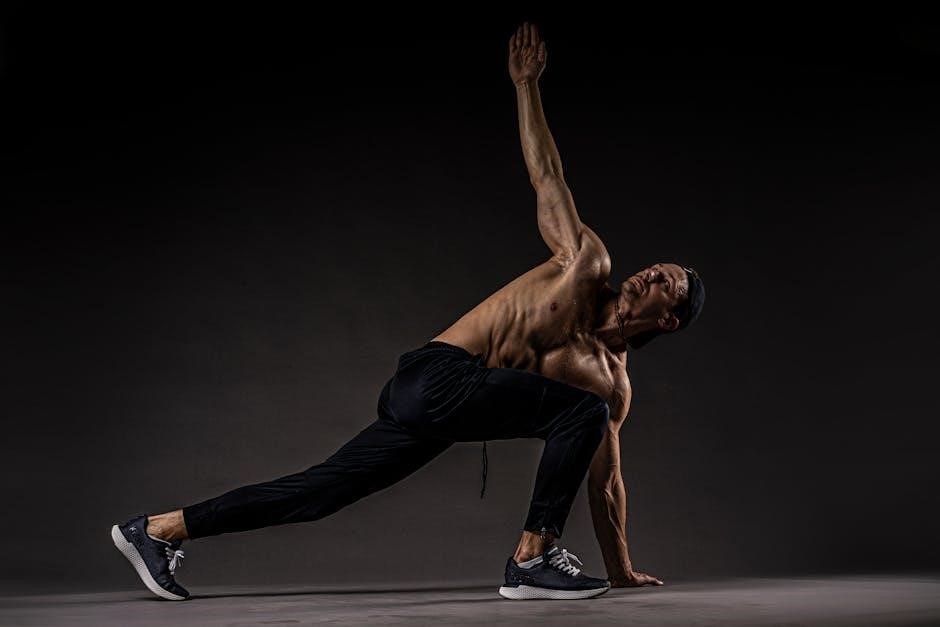
Strengthening hips and glutes stabilizes the piriformis, while regular walking (150 minutes/week) aids recovery. Warm-up routines prevent muscle strain, enhancing stretch benefits.
These lifestyle adjustments, alongside PDF-guided stretches, promote long-term relief and improved musculoskeletal health, supporting overall well-being.
Strengthening Exercises for Hip & Glute Muscles
Strengthening the muscles surrounding the piriformis is crucial for providing support and stability, ultimately reducing strain on the muscle itself and alleviating symptoms of piriformis syndrome. A comprehensive approach, often detailed in piriformis stretch PDFs, incorporates exercises targeting the gluteus maximus, gluteus medius, and hip external rotators.
Effective exercises include glute bridges, which strengthen the gluteus maximus, and side-lying leg raises, focusing on the gluteus medius. Clamshells are excellent for hip external rotation, a movement often restricted by a tight piriformis. Banded walks, using a resistance band around the ankles or thighs, further enhance gluteus medius activation.
These exercises not only strengthen the supporting muscles but also improve hip mechanics and overall lower body function. Consistent implementation, alongside targeted piriformis stretches found in downloadable guides, is key to long-term relief and preventing recurrence of symptoms. Remember to maintain proper form to avoid injury and maximize effectiveness.
Importance of Regular Walking & Aerobic Exercise
Regular aerobic exercise, particularly walking, plays a vital role in managing and preventing piriformis syndrome. Physicians recommend adults aim for at least 150 minutes of moderate-intensity aerobic activity each week, a guideline often emphasized within piriformis stretch PDFs as a complementary therapy.
Walking promotes blood flow to the piriformis muscle and surrounding tissues, aiding in healing and reducing inflammation. It also helps maintain flexibility and prevents muscle imbalances that can contribute to the condition. Beyond walking, activities like swimming, cycling, or using an elliptical machine can provide similar benefits.
Consistent movement prevents stiffness and encourages a healthy range of motion in the hips and lower back. Combining aerobic exercise with targeted piriformis stretches – readily available in downloadable guides – creates a synergistic effect, maximizing relief and improving overall physical function. Start gradually and increase intensity over time.
Warm-up Routines Before Exercise
Prioritizing a warm-up before any exercise routine is crucial, especially when addressing piriformis syndrome. Many piriformis stretch PDFs emphasize the importance of preparing muscles for activity to avoid strain and potential aggravation of symptoms. A proper warm-up increases blood flow, enhances muscle elasticity, and improves joint mobility.

Begin with 5-10 minutes of light cardiovascular activity, such as walking or marching in place. Follow this with dynamic stretches, focusing on movements that mimic the exercises you’ll be performing. Gentle hip circles, leg swings, and torso twists are excellent choices.
Specifically, incorporating gentle piriformis-focused movements into your warm-up can be highly beneficial. These could include modified figure-four stretches held briefly, or controlled hip rotations. Avoiding straining cold muscles is paramount; a thorough warm-up sets the stage for a safe and effective workout, maximizing the benefits of your stretching routine.

Resources & Further Information
Printable piriformis stretch PDFs are widely available online, alongside event listings in Italy via Eventi Italiani and TicketOne for sports & culture.
Finding Printable Piriformis Stretch PDFs
Locating high-quality, printable piriformis stretch PDFs is surprisingly straightforward with a quick online search. Many physiotherapy clinics and wellness websites offer downloadable guides detailing various stretches, often including visual aids for proper form.

Several resources provide comprehensive collections, such as documents outlining 21 different flexibility exercises, including dedicated sections for the piriformis stretch. These PDFs frequently incorporate stretches like the seated piriformis stretch, supine piriformis stretch (figure four), and variations with hip rotation.
Specifically, you can find PDFs detailing home exercise programs designed to address piriformis issues, offering step-by-step instructions and illustrations. Look for guides that emphasize gentle movements and proper technique to avoid exacerbating pain. Remember to consult with a healthcare professional before starting any new exercise program, even with a guided PDF.
Furthermore, resources often highlight the importance of complementary exercises, like strengthening hip and glute muscles, to support the piriformis and prevent future issues. Prioritize PDFs from reputable sources to ensure accuracy and safety.
Locating Local Sports Events & Activities
While piriformis stretch PDFs focus on recovery, staying active is crucial! Discovering local sports events and activities can complement your stretching routine and overall well-being. In Italy, platforms like Eventi Italiani specialize in geolocating various events – from calcio (soccer) to tennis – connecting you to nearby competitions and matches.
TicketOne.it is a leading Italian ticketing website for concerts, shows, and sporting events, offering a convenient way to purchase tickets. Exploring these options encourages regular movement, which, as recommended, prevents muscle imbalances contributing to piriformis issues.
Consider activities that promote gentle exercise, like walking groups or recreational sports leagues. Even planning a family vacation centered around a local event can provide motivation for staying active. Remember, consistent, moderate activity, alongside dedicated stretching, is key to long-term relief and prevention.
Prioritize events that align with your fitness level and interests, ensuring a fun and sustainable approach to incorporating activity into your lifestyle.
Ticket Purchase Options for Events
Complementing your piriformis stretch PDF routine with attendance at local sporting events requires convenient ticket access. TicketOne.it stands as Italy’s premier online ticketing platform, offering a vast selection for music, shows, and, importantly, sports events. Their user-friendly interface allows for easy browsing and secure purchases.
Beyond TicketOne, event organizers often sell tickets directly through their websites or designated box offices. Checking the official event page is always recommended to compare prices and availability. Some smaller, local events may utilize regional ticketing services or even offer tickets at the venue itself.
Consider purchasing tickets in advance, especially for popular events, to secure your spot and potentially benefit from early-bird discounts. Be mindful of potential service fees and delivery charges when comparing options. Remember, attending events is a proactive step towards a healthier lifestyle, supporting your recovery alongside dedicated stretching exercises.
Always verify the legitimacy of the ticket vendor before making a purchase to avoid scams.